
.jpg)
Seamless Blending of the Door Within Spaces: Hidden Design Magic for Modern Interiors
Introduction
Have you ever walked into a beautifully designed room and realized you couldn’t tell where the door was? That’s the charm of a well-designed, seamless door. It’s not just a clever trick — it’s a design philosophy that values simplicity, continuity, and elegance.
In today’s homes, where every detail counts, the way doors interact with walls can completely change how a space feels. A hidden or flush door blends perfectly into the wall, creating a clean, uninterrupted visual flow. It’s a favorite among architects and interior designers who love minimalism — but it’s also a practical solution for anyone who wants a calm, clutter-free environment.
In this guide, we’ll explore the art and practicality behind the seamless blending of the door within spaces. You’ll learn how hidden doors are designed, why they’re gaining popularity, and how they can transform ordinary walls into elegant design statements. Whether you’re designing a new home or upgrading your current one, this concept can add subtle sophistication to any space.
Why Seamless Door Design Matters in Modern Interiors
Modern design is all about simplicity — clean lines, minimal decor, and open, breathable layouts. Every element in a room serves a purpose, and unnecessary visual noise is carefully avoided. Traditional doors, with their bulky frames and contrasting finishes, can often interrupt this harmony.
That’s where seamless door design comes in. By aligning the door perfectly with the wall surface, it becomes a part of the architecture rather than an object standing apart from it. The result? A smooth, continuous surface that gives your space a sense of calm and balance.

But this isn’t just about looks. Hidden or flush doors also make small rooms feel larger by reducing visual clutter. They can hide private areas, storage rooms, or utility spaces — keeping your living zones sleek and organized.
The best part is that this concept fits into many design styles. Whether your home is modern, industrial, or contemporary classic, a well-crafted seamless door adds quiet luxury without demanding attention.
Hidden Doors – The Art of Disappearing in Plain Sight
The idea of a hidden door may sound like something out of a mystery novel, but in modern interiors, it’s a design statement. Hidden doors are crafted to disappear into their surroundings — same color, same finish, same detailing. When closed, you can barely tell they’re there.
These doors are built with concealed hinges, frameless edges, and flush fittings, allowing them to sit level with the wall. Handles are often replaced with touch-latch systems or minimal grooves that keep the surface uninterrupted.

Designers love hidden doors because they create a sense of intrigue. They allow you to separate spaces without breaking the visual flow — perfect for areas like home offices, walk-in closets, or utility zones that you want to keep out of sight.
A well-executed hidden door can turn a simple wall into a subtle design masterpiece — one that’s as functional as it is beautiful.
Focal Wall Paneling – Where Function Meets Art
One of the most stunning ways to create a hidden door is by blending it into focal wall paneling. Imagine a bedroom where the wall behind your bed has vertical panels, textures, or artwork — and somewhere in that pattern lies a perfectly concealed door.
Designers often use PU-finished HDHMR panels (High-Density High Moisture Resistant boards) arranged in clean vertical or horizontal grids. The door follows the same lines, making it blend right in. Sometimes, the panels are hand-painted or have carved detailing that adds artistic flair.

The magic lies in precision — aligning every groove and line so the door feels like part of the wall, not an afterthought. This type of detailing turns the door from a necessity into a feature that enhances the room’s character.
It’s especially effective in bedrooms, studies, or living spaces where you want the design to feel unified and intentional.
Louvered and Panel-Integrated Hidden Doors
Hidden doors don’t always have to be flat or plain. In spaces where airflow is important, such as bathrooms, closets, or laundry rooms, louvered hidden doors are an excellent solution.

These doors continue the pattern of louvered wall panels, allowing air circulation while maintaining the same design rhythm. When done right, the door’s slats align perfectly with the wall, making it visually seamless.

Another variation is panel-integrated doors, where the door shares the same texture, pattern, or material as the wall paneling. For example, if your wall has a grooved wooden pattern, the door’s grooves will align exactly with it. This design trick not only hides the door but also enhances the geometry and flow of the room.
Handles are often invisible — replaced by magnetic catches or push-to-open systems. The result is a smooth, continuous surface that feels futuristic and effortlessly elegant.
Pocket Sliding Doors – Space-Saving and Sleek
When space is limited, every inch counts. That’s why pocket sliding doors are such a genius solution. Instead of swinging open, these doors slide neatly into a cavity within the wall — completely disappearing when open.
Pocket doors are ideal for small apartments, studio layouts, or tight spaces like bathrooms and pantries. They save floor area, eliminate the need for door clearance, and keep traffic flow smooth.

From a design perspective, pocket doors maintain the minimalist look that modern homes crave. When closed, they align perfectly with the wall; when open, they vanish. And since they can be finished in wood, glass, or matte laminate, they adapt easily to different aesthetics.
Installing one requires thoughtful planning — the wall must have enough cavity depth for the door to slide into — but the payoff is worth it. You get functionality, elegance, and a strikingly clean visual appearance.
Combination Doors – The Best of Both Worlds
Not all spaces are the same, and sometimes two sides of a wall have completely different personalities. That’s where combination doors come in — a brilliant idea where each side of the door has a different finish to match the adjoining rooms.
For example, a door connecting a kitchen and a living area might have a metallic laminate finish on the kitchen side for durability and a warm wooden veneer on the living room side for comfort.

This design allows each room to express its own identity while maintaining visual balance. It’s perfect for spaces where style and function need to coexist harmoniously.
The concept of a combination door also helps unify different material palettes in open layouts, ensuring that the transition between spaces feels natural and cohesive.
Sliding Stackable Doors and Partitions
For flexible living, sliding stackable doors offer the best of both privacy and openness. These are modular panels that glide along a track and stack neatly when opened, allowing you to open or close off spaces as needed.
They’re ideal for multifunctional areas — like studio apartments, home offices, or living-dining combinations. When closed, the panels look like part of the wall. When opened, they create one large, flowing space.

Designers often pair these with trackless bottom systems to maintain a seamless floor finish and avoid visible rail lines. The hardware is hidden in the ceiling or upper frame, making the movement smooth and quiet.
It’s a smart way to create spaces that adapt to your lifestyle — private when you need focus, and open when you want connection.
What are the possible scene it can create,
Focal wall paneling

The bedroom door is designed as a hidden element within the focal wall paneling.
PU-finished HDHMR panels, laid in a clean vertical grid, form the backdrop — blending the door into a composition of three striking vertical frames.

Two of these frames hold hand-painted artworks, while the third features a CNC-carved pattern, together creating the illusion of a curated art wall rather than a functional opening.
Louvered paneling with Handle

Blend with existing Wall paneling

Secret Door to prevent access –Eg Store room

They disappear into a pocket built within the wall, saving space and creating a clean look. Installation involves creating a dedicated pocket within the wall framing.
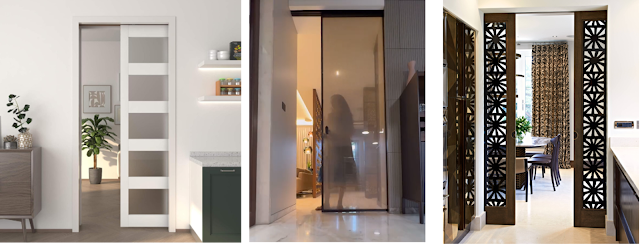
A combination door is a single unit featuring two different materials on opposing sides. This allows you to customize the look and function for each space. For example, you could have a sleek metal finish on the kitchen side and warm, inviting wood on the living room side.


Material and Finish Options for Seamless Doors
The beauty of seamless doors lies in their ability to disappear — and that depends heavily on material choice and finish.
PU-finished HDHMR panels are a top choice because they create a smooth, paintable surface that can match wall color exactly. Veneered MDF panels offer warmth and texture for more natural interiors. For a contemporary look, matte laminates and metallic foils are excellent.
You can even experiment with mirrored or tinted glass doors that add depth and light reflection, making rooms feel larger. The goal is to keep textures consistent — the closer your door matches the wall’s tone and surface, the better the illusion.
Subtle details like concealed hinges, flush handles, and groove alignment make a world of difference in achieving that perfect “invisible” effect.
Practical Benefits of Seamless Door Design
Seamless door design isn’t just visually appealing — it’s smart, too.
- It saves space by eliminating bulky frames and casings.
- It enhances architectural flow, keeping walls clean and consistent.
- It provides privacy without interrupting design balance.
- It helps conceal functional areas like closets or laundry rooms.
- It simplifies maintenance since fewer gaps mean less dust and grime buildup.
Above all, seamless doors make your interiors feel more intentional. They reflect a design maturity that values both form and function — beauty that serves a purpose.
Common Design Mistakes to Avoid
Even small errors can ruin the seamless look. Here are a few pitfalls to steer clear of:
- Mismatched finishes: A slight variation in texture or paint sheen can make the door outline visible.
- Poor hinge alignment: Uneven hinges can create shadows or gaps that break the illusion.
- Ignoring ventilation: Hidden bathroom doors need proper airflow — louvered designs help.
- Skipping professional carpentry: Precision is everything in flush door design; expert installation ensures lasting performance.
Getting the technical details right ensures your seamless door looks great not just today, but for years to come.
FAQs About Seamless Door Design
Q1. What is a seamless or hidden door?
A hidden or seamless door is designed to align perfectly with the wall surface, using flush fittings and concealed hardware for a unified look.
Q2. Can I add a hidden door to an existing wall?
Yes, with professional carpentry. Panel cladding or false walls can make it possible.
Q3. Are hidden doors durable?
Yes, when made from moisture-resistant materials like HDHMR and installed with high-quality fittings.
Q4. Do they cost more than regular doors?
Slightly, due to special hardware and precision finishing — but the aesthetic payoff is significant.
Q5. Can hidden doors be soundproof?
Yes. With proper insulation and door seals, they can provide excellent acoustic performance.
Conclusion
The seamless blending of the door within spaces isn’t just a design trend — it’s a timeless approach to creating harmony in your home. Hidden doors erase visual clutter, connect spaces fluidly, and bring a sense of sophistication that stands out precisely because it doesn’t.
Whether you’re working on a modern apartment or a traditional home, integrating a flush or concealed door can make your space feel calm, intentional, and beautifully unified.
Remember, great design isn’t about what you add — it’s about what you blend.
“A well-designed space doesn’t reveal everything at once — sometimes, its beauty lies in what stays hidden.”


.jpg)


.jpg&description=Seamless Blending of the Door Within Spaces: Hidden Design Magic for Modern Interiors)
0 Comments