
.jpg)
Sump Design: The Foundation of Smart Water Management in Indian Homes
Introduction: Understanding the Purpose of a Sump
In every home, the way we handle water says a lot about how we value sustainability, efficiency, and planning. A sump—an underground water storage structure—is one of the most practical yet overlooked parts of residential design. Positioned below ground level, it quietly performs one of the most vital functions in a home: storing clean water safely and efficiently.
In many parts of India, where municipal water supply is often intermittent, a sump ensures daily life continues smoothly. It acts as the first storage point before water is pumped into the overhead tank. Beyond its functional role, the placement, design, and capacity of a sump can influence energy consumption, water quality, and even the architectural aesthetics of a house.
Today, architects and homeowners are rethinking the humble sump—not just as an engineering component but as an integrated part of sustainable architecture.

1. The Role of a Sump in Modern Residential Design
Modern architecture aims to create homes that are both intelligent and resource-efficient. A sump fits perfectly into this philosophy. Traditionally, water was stored in open wells or tanks, but as urbanization expanded and space became limited, underground sumps emerged as an efficient alternative.
A sump stores water collected from municipal lines, borewells, or even rainwater harvesting systems. Its underground placement protects the stored water from heat and light, keeping it cool and clean. In many sustainable homes, the sump also doubles as part of a rainwater harvesting system, ensuring that every drop of rain is collected and reused.
When a sump is well-designed, it contributes silently to the comfort and efficiency of daily living—reducing dependence on public supply systems, saving energy, and ensuring hygiene.

2. Choosing the Right Location for Your Sump
The location of the sump is not a random choice; it is guided by both practical engineering logic and Vastu Shastra principles.
From a technical perspective, the sump should be easily accessible for maintenance and close to the water source or municipal connection. It should also be at a lower elevation than the overhead tank for efficient pumping.
From a Vastu perspective, the northeast corner (Ishan Kon) is considered the most auspicious area for water bodies. Water in this direction is believed to bring prosperity and health, as it aligns with the flow of positive energy. Sumps should never be placed in the southwest or center of the site, as these directions are associated with heaviness and stability rather than flow.


- It will be ideal if the location of the sump is at the front portion of the home like an area below the car porch.
- It is also advisable to have the underground sump close to the main roads where the water lines pass through as it will be easy to give a connection.


- In the east of north-east and north of north-east is most beneficial.
- Avoid constructing sumps in the south-east, north-west, and in south-west corners of the plot.
- An underground sump should not be constructed at the center of the plot at any cost.

A good architect balances these perspectives—ensuring the sump’s location supports both structural efficiency and energy harmony.
3. Understanding Sump Capacity and Size
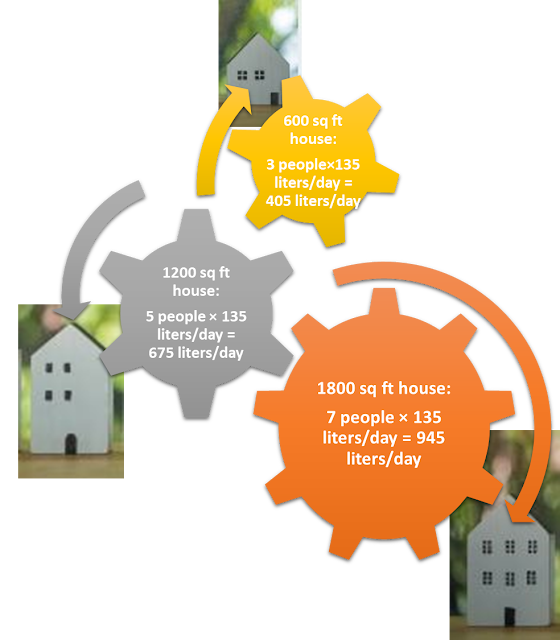
The capacity of a sump depends on the household’s daily water requirement. For a typical Indian household, water demand ranges between 135 to 200 liters per person per day, depending on usage and climate.
A small house of around 600–800 square feet might need a sump that stores 1200–2000 liters of water, while a large independent house may need up to 5000 liters. The sump should ideally hold three to five days’ water supply to account for irregular municipal supply or power cuts.
A simple formula often used by architects is:
Capacity (liters) = Number of family members × Daily use (liters per person) × Number of storage days




- Minimum capacity - 3 days
- Maximum capacity - 5 days


Beyond quantity, the shape and depth matter too. Rectangular sumps are easy to construct and clean, while circular sumps are structurally stronger for deeper capacities.
4. Construction Materials and Design Choices
The strength and longevity of a sump depend heavily on the materials used. The most common types are:
- RCC (Reinforced Cement Concrete) sumps – Highly durable and watertight, suitable for long-term use.
- Brick masonry sumps – Cost-effective and easier to construct for smaller capacities.
- Prefabricated or FRP sumps – Lightweight, easy to install, and useful in urban apartments or temporary setups.


Waterproofing is essential, regardless of the material. Techniques like cementitious waterproof coatings, crystalline admixtures, or bituminous layers can prevent leakage. Architects often specify double plastering inside the sump to ensure no seepage through walls.


5. Integrating Rainwater Harvesting with Sump Design
A sump can do more than just store municipal water—it can become the centerpiece of a rainwater harvesting system.
When rain falls on the roof, it can be guided through downpipes into a filtration unit before entering the sump. Simple filters made from sand, gravel, and charcoal remove impurities, making the water usable for non-potable purposes like cleaning, gardening, or even washing.
This integration reduces dependency on groundwater, supports urban water balance, and provides a buffer during dry months. For eco-conscious homeowners, connecting the sump with overflow recharge pits can help replenish groundwater tables.

6. Common Mistakes to Avoid in Sump Construction
Even though sump construction may seem straightforward, several small mistakes can lead to long-term issues.
Improper location: Placing the sump in the wrong direction or under load-bearing areas can cause structural stress or energy imbalance.Insufficient capacity: Underestimating daily use results in frequent shortages.
Poor waterproofing: Leads to seepage and contamination from groundwater.
No ventilation: Trapped air can cause odors and bacterial growth.
Neglected maintenance: Over time, sediment and algae build up, compromising water quality.
Each of these issues can be avoided through careful planning and supervision during construction.
7. Architectural Integration: Concealing Utility with Design
One of the biggest challenges in modern homes is integrating utility spaces without compromising aesthetics. Architects today are finding creative ways to conceal sumps beneath gardens, driveways, or porches.
These concealed designs allow easy access for cleaning while maintaining the visual appeal of the exterior. In contemporary architecture, sumps often form part of a larger water management plan—coordinating with stormwater drains, landscape irrigation, and filtration systems.
The design intent is to create homes that are self-sufficient in water yet visually harmonious.

8. Maintenance and Safety Measures
Like all water systems, a sump requires periodic cleaning and inspection. Sediments, leaves, and dust can accumulate over time, especially if connected to a rainwater system.
Experts recommend cleaning sumps every six months. The process involves draining the water, scrubbing walls with mild disinfectant, and rinsing thoroughly. Installing a small ventilation pipe ensures air circulation, preventing odor and algae growth.
Safety also matters—sumps must have secure lids to prevent accidents, especially in homes with children or pets.
9. Sustainable Innovations: Smarter Water Management
The future of sump design lies in technology and sustainability.
New materials like FRP (Fiber Reinforced Plastic) make sumps lighter and leak-proof. Some modern systems include smart sensors that monitor water levels, detect leaks, or automate pump control to prevent dry running.
Architects are also combining sumps with solar water pumping systems, making homes not only water-efficient but also energy-independent. In green-certified buildings, sumps are designed with dual chambers—one for potable water and another for recycled greywater.

10. Case Studies: How Context Shapes Design
In Indian architecture, the sump adapts beautifully to local needs:
- Urban homes often rely on compact RCC sumps with high capacity, located below driveways.
- Rural homes may use open brick masonry sumps, where maintenance is easier.
- Eco-housing projects combine sumps with rainwater filtration and solar pumps, achieving near-zero dependence on external sources.
Architects like Laurie Baker emphasized using simple local materials—brick, lime, and stone—for sump construction, proving sustainability can be both low-cost and elegant.

11. Sump Design and the Vernacular Wisdom
Long before modern construction methods arrived, Indian homes used natural slope-based drainage systems and storage pits to collect water. These ancestral systems were climate-responsive, low-cost, and community-oriented.
Reintroducing such wisdom through sump design is not nostalgia—it’s adaptation. As climate patterns shift and water scarcity grows, local methods like terracotta linings, natural filtration, and recharge pits are finding renewed relevance.
When combined with modern engineering, these ideas make architecture more resilient and contextually grounded.
12. Sump and Home Aesthetics: The Invisible Element
While hidden underground, the sump influences above-ground aesthetics too. By freeing up space on the terrace (no bulky tanks) and keeping the façade clean, it supports minimalist, balanced architecture.
In projects emphasizing landscape continuity, sumps are integrated into pathways or lawns, with decorative inspection lids that blend into the design. Such details show that functionality and beauty can coexist seamlessly.

13. The Future: Water as an Architectural Element
The 21st-century home is being redesigned around resource consciousness. The sump, once seen as a utility pit, is now part of a holistic architectural narrative. Future homes will likely use AI-enabled monitoring, recycled greywater integration, and prefabricated sustainable sumps.
More importantly, water itself is being treated as an architectural material—flowing through courtyards, cooling spaces, and creating emotional connections between humans and nature.
In this sense, the sump is not merely a container; it is a symbol of conscious design, connecting the technical and the poetic.
Conclusion: Building from the Ground Up
A sump may be hidden underground, but its impact reaches every corner of a home. It supports daily living, sustains sustainability goals, and reflects the architect’s commitment to holistic design.
In an era of climate unpredictability, intelligent water storage is not optional—it’s essential. Whether through rainwater harvesting integration or smart monitoring systems, sumps are becoming a cornerstone of eco-resilient architecture.
Designing one thoughtfully is both a practical decision and an environmental responsibility. The future of smart homes begins with the humble sump—built not just for storage, but for sustainability.

FAQ Section
Q1: What is the best location for a sump according to Vastu?
The northeast corner (Ishan Kon) is ideal, as it aligns with the natural flow of positive energy and promotes health and prosperity.
Q2: How much capacity should my sump have?
A 4-member household should store 150 liters per person per day for at least 3–5 days—around 1800–3000 liters total.
Q3: Can I use my sump for rainwater harvesting?
Yes, after proper filtration. This reduces water bills and supports groundwater recharge.
Q4: How do I maintain an underground sump?
Clean twice a year, disinfect regularly, and ensure proper ventilation and waterproofing.
Q5: Is there a difference between sump and septic tank?
Yes. A sump stores clean or rainwater; a septic tank stores and treats wastewater.


.jpg)

.jpg&description=Sump Design: The Foundation of Smart Water Management in Indian Homes)
0 Comments