
.jpg)
Kitchen Location & Type: How to Choose the Best Layout for Function and Family size
Introduction
The kitchen is more than just a place to cook—it’s the heart of the home. It’s where meals are made, conversations begin, and family life unfolds. Whether you live in a large house or a cozy apartment, how your kitchen is placed and designed has a big impact on how you live.
A kitchen’s location and layout decide how light, air, and activity flow through your home. It influences everything from hygiene and comfort to family interaction. A poorly placed kitchen can make daily chores harder, while a well-designed one feels effortless.

In this guide, we’ll explore how to find the ideal kitchen location in your home, understand different kitchen types, and choose a layout that suits your family’s needs. By the end, you’ll have a clear idea of how to create a kitchen that’s both functional and welcoming.

Why Kitchen Location Matters in Home Design
The location of your kitchen plays a much bigger role than you might think. It affects how you move around your house, how much natural light you get while cooking, and even how comfortable the home feels overall.
A kitchen placed near the dining area makes serving and cleaning easier. One located near the backyard or balcony allows fresh air to circulate and helps manage heat and smoke from cooking. On the other hand, a kitchen tucked away in a dark corner often feels stuffy, cramped, and hard to maintain.
Accessibility is another key factor. You should be able to move easily between the refrigerator, sink, and cooking area. And if you have kids, keeping an eye on them while preparing meals becomes simpler when the kitchen connects visually to the living room or play area.
In short, a well-located kitchen supports everyday life—it keeps things flowing, bright, and convenient.
Ideal Kitchen Location Based on Functionality
When planning your kitchen, think of it as a space that connects several functions. The best location ensures smooth movement, safety, and practicality.
Ideally, the kitchen should be near the dining space to minimize carrying distance when serving food. It should also have easy access to the utility area or service balcony, especially for washing and drying dishes or clothes.

Visibility plays an important role too. Being able to look out into the garden or toward the front door helps parents multitask comfortably—cooking while keeping an eye on kids or visitors.
Ventilation is equally vital. Kitchens generate heat, moisture, and odors, so placing them where there’s enough cross-ventilation keeps the environment fresh. Positioning the kitchen near windows or outer walls ensures natural airflow and sunlight, which also discourages bacteria and mold.
Kitchen Placement According to Vastu Shastra
In many Indian homes, Vastu Shastra—the traditional science of design—plays a role in determining kitchen placement. It focuses on harmony between natural elements like light, air, and energy flow.
According to Vastu principles:
- The Southeast corner of the house is considered the best for kitchens, as it aligns with the fire element.
- The Northwest direction is the next best option, especially if Southeast isn’t available.
- The cook should ideally face East while preparing meals, which symbolizes energy and positivity.
- The kitchen should not be placed directly below or above a bathroom, as it’s believed to disturb the energy balance.

Even if you don’t strictly follow Vastu, these principles make practical sense. A Southeast kitchen often gets morning sunlight, helping to dry out moisture and keep the space clean.
Importance of Light, Air, and Hygiene in Kitchen Design
A bright, airy kitchen feels welcoming and stays cleaner for longer. Natural light not only reduces your electricity usage but also enhances hygiene. Sunlight helps keep damp corners dry, preventing mold and bacteria buildup.
Airflow is equally essential. Without proper ventilation, smoke and grease can accumulate, making the kitchen feel heavy and unpleasant. Installing windows opposite each other creates cross-ventilation, which refreshes the air naturally.
If natural ventilation is limited, consider chimneys, exhaust fans, or skylights. These additions help maintain air quality and comfort, especially in urban apartments where kitchens are often enclosed.
A well-lit, well-ventilated kitchen is more than just functional—it’s healthier and more enjoyable to work in.
Understanding Kitchen Sizes and Proportions
Kitchen size depends largely on your home’s area and family size. A single person or couple might only need a small, efficient kitchen, while a large family requires more workspace and storage.


A standard kitchen measures around 2400 mm x 2400 mm, but designs vary depending on layout and usage. Small homes often feature single-wall or galley kitchens, while larger spaces accommodate L-shaped, U-shaped, or island layouts.
The key is to maintain balance—your kitchen shouldn’t feel too cramped or too spread out. A functional kitchen ensures that every inch serves a purpose, whether it’s storage, movement, or preparation.
The kitchen can be designed on these dimensions- 2400 x 3000 mm,
- 2400 x 3600 mm,
- 2400 x 3900 mm,
- 3000 x 3600 mm etc.
Types of Kitchen Layouts
The layout of a kitchen determines how easily you can move between key zones—cooking, cleaning, and storage. Let’s explore the six most common types of kitchen layouts and what makes each unique.
1. Single-Wall Kitchen Layout
This design places everything along one wall—sink, stove, and storage. It’s best suited for small apartments or studio homes. The linear setup makes it simple and efficient but may offer limited counter space.

To make this layout more practical, use vertical cabinets, wall-mounted shelves, or compact appliances that maximize available space.
2. Galley Kitchen Layout
The galley kitchen features two parallel countertops, forming a narrow corridor between them. It’s one of the most efficient designs for cooking because everything is within arm’s reach.
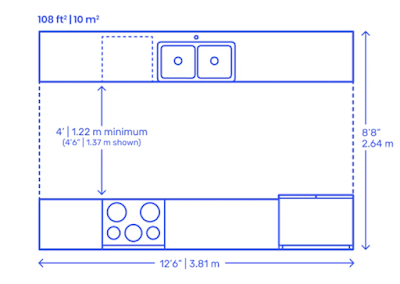
This layout works well for compact homes and allows multiple people to work at once without getting in each other’s way. It also makes excellent use of space by eliminating corner cabinets.
3. L-Shaped Kitchen Layout
An L-shaped kitchen uses two adjoining walls to form an “L.” It’s one of the most popular designs because it offers flexibility and balance.

This layout supports the kitchen work triangle—the ideal distance between the sink, stove, and refrigerator—making cooking smooth and efficient. It also allows space for a small breakfast nook or dining area, making it great for family interaction.
4. U-Shaped Kitchen Layout
The U-shaped kitchen offers maximum countertop and storage space. It wraps around three walls, creating a cozy and efficient workspace.

This type is ideal for families that cook frequently or for homes with multiple users. The enclosed shape keeps everything within easy reach but requires enough floor space for comfortable movement.
5. Peninsula Kitchen Layout
The peninsula kitchen is a smart extension of the L- or U-shaped layout. It adds a connected counter that functions as an island substitute.

This extra surface can serve as a breakfast bar, prep area, or mini dining table—perfect for medium-sized homes that can’t fit a full island.
6. Island Kitchen Layout
The island kitchen is the hallmark of open-plan modern homes. The island acts as a multifunctional center—used for cooking, prepping, serving, or dining.


It encourages family interaction and allows free movement around the kitchen. However, it requires ample space and thoughtful planning to avoid crowding.
Choosing the Right Kitchen Type for Your Family Size
The perfect kitchen isn’t about trends—it’s about matching your space and lifestyle.
If you live alone or as a couple, compact designs like the single-wall or galley kitchen are sufficient. They keep everything accessible without wasting space.
For small to medium families, L-shaped or peninsula kitchens work well. They offer flexibility for cooking and dining together, without making the space feel crowded.

Larger families or those who love entertaining will appreciate U-shaped or island kitchens, as they provide extra room for teamwork and storage. These layouts make it easy to cook, clean, and socialize all at once.
Ultimately, your kitchen type should reflect how you live. A space that feels natural and supports your daily rhythm is always the right choice.
Efficient Workflow and the Kitchen Work Triangle
The kitchen work triangle is one of the most fundamental principles in design. It connects the three main work zones—the sink, the stove, and the refrigerator.
For efficiency, these points should form a triangle, keeping movement smooth and avoiding unnecessary steps. If these zones are too far apart, cooking feels tiring. If they’re too close, the space becomes cramped.

In modern homes, especially where multiple people cook together, designers are replacing the triangle with work zones—dedicated areas for prep, washing, cooking, and storage. This approach creates harmony between function and comfort.
Tips for Designing a Practical Kitchen
Designing the perfect kitchen doesn’t have to be complicated. Here are some essential tips to make your kitchen more functional and enjoyable:
Keep ventilation a priority. Natural air and light reduce heat and moisture buildup.
Maintain clear movement space—at least 4 feet between opposite counters for easy flow.
Install good lighting over key areas like the sink and stove for visibility and safety.
Choose durable, easy-to-clean materials like granite, quartz, or laminate for counters.
Plan ample storage at eye and waist levels to reduce strain.
Think ahead—leave room for future upgrades like appliances or modular units.
Remember, functionality doesn’t mean giving up style. A practical kitchen can still be beautiful—it’s all about thoughtful planning and smart use of space.
Conclusion
Your kitchen is more than just a cooking space—it’s where your family gathers, your mornings begin, and your evenings unwind. Designing it thoughtfully can make a huge difference in your daily life.
Whether you follow Vastu principles or focus purely on practicality, the key is to balance light, air, and efficiency. Choose a layout that fits your family’s size, habits, and rhythm.
Because the best kitchens aren’t just about aesthetics—they’re about how they make you feel and function every day.
A well-placed, well-designed kitchen turns routine cooking into a joyful experience. It’s not just the heart of the home—it’s where the home truly comes alive.

%20(6).jpg)
.jpg)
.jpg)
.jpg)
.jpg)


.jpg&description=Kitchen Location & Type: How to Choose the Best Layout for Function and Family size)
0 Comments